
Summary
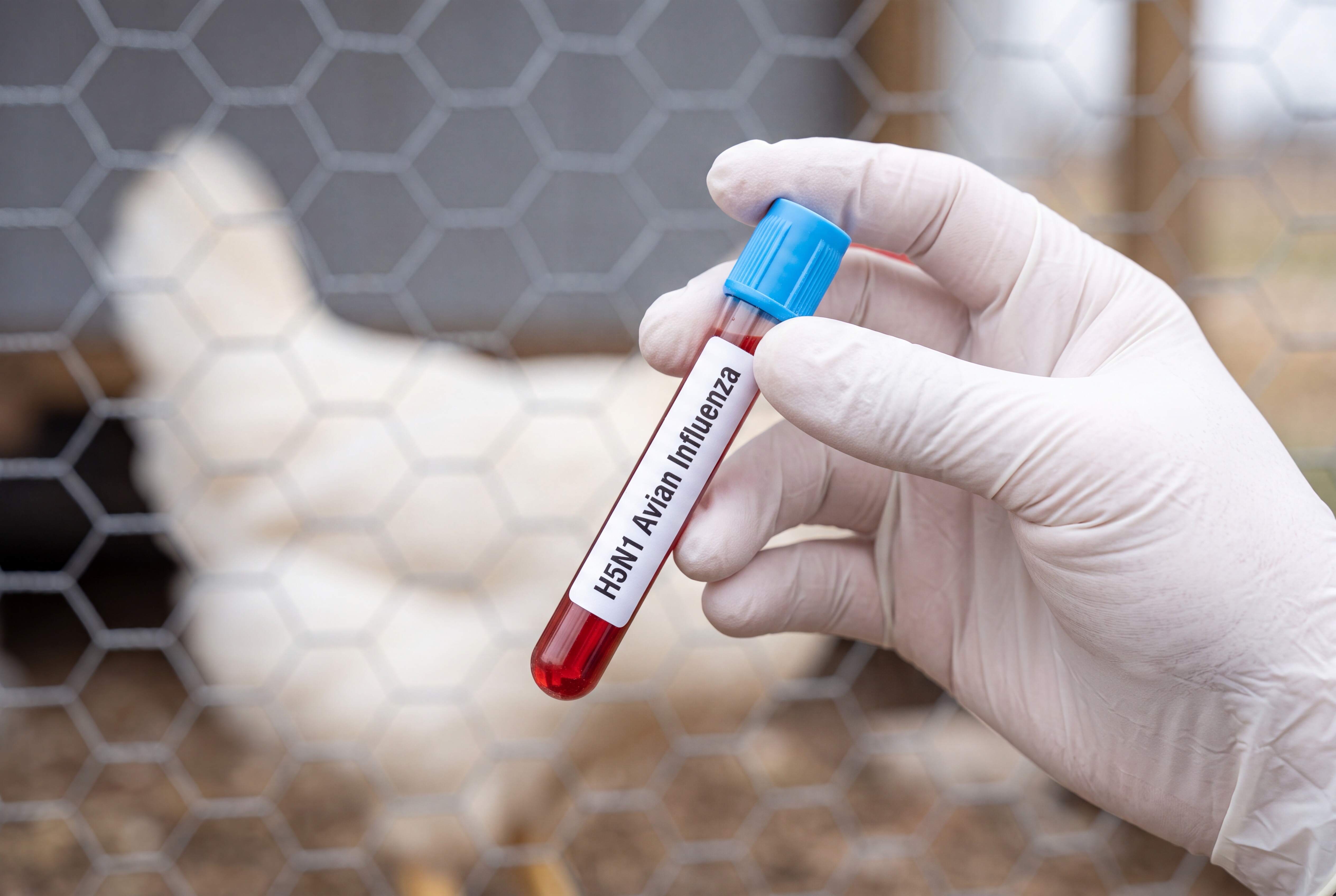
Washington State Department of Agriculture (WSDA) reports that highly pathogenic avian influenza (HPAI), commonly known as bird flu, was detected in a commercial poultry facility in Pierce County. This is the first detection in commercial poultry in Washington this year.
While the risk to the public is low, transmission of H5N1 from infected animals to humans is possible. Sporadic human cases have been reported in other counties in Washington and in other states. For updated information on human cases, see Centers for Disease Control and Prevention’s (CDC’s) A(H5) bird flu current situation page.
People can become infected if they:
- Get the virus in their eyes, nose, or mouth.
- Breathe in the virus.
- Consume contaminated or infected raw milk or uncooked meat products.
The incubation period in humans is up to 10 days.
Public health employees will call workers who had contact with infected birds in Pierce County. They will assess exposure risk, offer post-exposure prophylaxis medication, and monitor farm employees for illness. Public health will also coordinate with exposed workers about plans for seeking healthcare if needed.
Call us at (509) 725-1001 to report suspected or confirmed cases or with questions.
Symptoms of concern
People exposed to avian flu within the last 10 days with the following symptoms are considered a case under investigation.
- Fever (measured) or feeling feverish/chills.
- Cough.
- Sore throat.
- Difficulty breathing (shortness of breath).
- Fatigue.
- Eye tearing, redness, or irritation (conjunctivitis).
- Headaches.
- Runny or stuffy nose.
- Muscle or body aches.
- Diarrhea or vomiting.
Call us at (509) 725-1001 to discuss symptoms of concern in people exposed to avian flu, testing, treatment, or infection control.
Requested actions
Identify
- Identify patients with acute respiratory illness (ARI) or other symptoms consistent with influenza. Symptoms of avian influenza can range from mild to severe.
- Assess all patients with ARI for risk factors for avian influenza in the 10 days before symptom onset:
- Close contact with sick or dead animals or their environments, especially birds, wildlife, livestock (including poultry), or domestic animals suspected of highly pathogenic avian influenza (HPAI).
- Consuming or handling raw animal products or parts from potentially infected animals, including raw cow milk and its products and raw-meat-based pet food.
- Close contact (within 6 feet) with a person who is suspected or confirmed to have avian influenza.
- Screen all patients with ARI (at minimum for emergency departments and inpatient settings) with the above questions. If any response is “yes,” isolate the patient and call us at (509) 725-1001.
Isolate
- Isolate patients with suspected or confirmed avian influenza in all healthcare settings:
- Use contact and airborne precautions. Use goggles or a face shield to protect your eyes.
- Use an airborne infection isolation room (also known as a negative pressure room), if you have one.
- Maintain contact and airborne precautions (with eye protection) for the duration of illness or until you consult with us and rule out avian influenza.
- If the patient is intubated, ensure a closed system and high-efficiency particulate air (HEPA) filter.
Inform and report
- If you suspect avian influenza, immediately call us at (509) 725-1001 or the Tribal Health Jurisdiction. Other immediately notifiable conditions include:
- All suspected and confirmed cases of novel influenza. This includes avian influenza (influenza A(H5) or others). A negative influenza polymerase chain reaction (PCR) doesn’t rule out avian influenza.
- All influenza A specimens that result as “unsubtypeable” (a positive test with a specimen subtype that can’t be identified).
Test
- Test all patients with ARI and epidemiologic risk factors for avian influenza.
- Collect specimens from suspected avian influenza patients within 24 hours of presentation. Testing should ideally be performed within 7 days of symptom onset.
- Collect standard respiratory samples to test for other conditions (depending on patient’s clinical presentation). For HPAI, you should also collect:
- A nasopharyngeal swab or a nasal swab combined with an oropharyngeal swab (i.e., two swabs in one viral transport media vial). A single nasal or oropharyngeal swab is also acceptable.
- A conjunctival swab in patients with conjunctivitis, with or without respiratory symptoms.
- In patients with severe respiratory disease, lower respiratory tract specimens. For example, endotracheal aspirate or bronchoalveolar lavage.
- Repeat testing using PCR for patients who previously tested negative for influenza A.
- A negative influenza A PCR does not rule out avian influenza in patients with ARI and epidemiological risk factors. Avian influenza should remain on the differential diagnosis.
- In outpatient settings, repeat influenza testing for patients who return with increased symptom severity.
- In inpatient settings, repeat influenza testing for at least two consecutive days unless an alternative diagnosis is confirmed.
- Testing/subtyping is available at Washington Public Health Labs (PHL).
- Avian influenza testing is available at PHL with prior arrangements with us.
- Send specimens for influenza subtyping directly to PHL. Send them for:
- All influenza A specimens that result as “unsubtypeable.”
- Specimens from hospitalized patients with risk factors for avian influenza, when subtyping is not available.
Subtype
- Obtain subtyping for:
- All influenza A-positive specimens from patients with epidemiologic risk factors for avian influenza.
- Subtyping is not required for hospitalized patients who don’t have epidemiologic risk factors for avian influenza.
- Options for subtyping:
- Option 1: Subtyping at hospital’s clinical lab or a commercial lab:
- For subtyping results H1 or H3, no further subtyping needed.
- For subtyping results H5 or “unsubtypeable,” submit specimen to PHL.
- Option 2: Subtyping request sent to PHL:
- If your facility doesn’t have subtyping capability, call us at (509) 725-1001 to submit specimens to PHL.
- Option 1: Subtyping at hospital’s clinical lab or a commercial lab:
- If you use laboratory-developed tests (LDTs) for subtyping:
- The protocol should subtype for seasonal A(H1) and A(H3) viruses before, or parallel with, A(H5) testing.
- LDTs for influenza subtyping are not considered confirmatory. You must send specimens to PHL for confirmatory subtyping.
- Hospitals and labs that participate in voluntary influenza subtyping surveillance (sentinel influenza surveillance network and RESP-NET) should follow agreements and protocols.
Treat
- Treat suspected avian influenza patients immediately with oseltamivir. Don’t wait for confirmation.
- For hospitalized patients, consider combination antiviral treatment like oseltamivir and baloxavir. Refer to CDC’s interim guidance on the use of antiviral medications.
Advise
- Advise patients not to handle sick or dead birds or other wildlife. Instead:
- Report sick or dead wild birds or other wild animals to Washington State Department of Fish & Wildlife.
- Report sick or dead domestic animals, including backyard flocks or livestock, with suspected avian influenza to Washington State Department of Agriculture.
- Washington State Department of Health (DOH) recommends seasonal influenza vaccine for patients 6 months or older.
- While it might not protect against avian influenza, it may protect against coinfection with seasonal influenza and HPAI.
Call us at (509) 725-1001 to report suspected cases or for additional guidance.
Resources
- Avian influenza, DOH.
- Backyard flock owners: Protect yourself from bird flu, CDC.
- Information for people exposed to birds or other animals infected with avian influenza, CDC.
- Information for workers exposed to H5N1 bird flu, CDC.
- Protect yourself from H5N1 bird flu: Wear personal protective equipment, CDC.
- Treatment of Bird Flu, CDC.